
Future-proofing Arctic Infrastructure: Digital Infrastructure & Arctic Nation-Building
In this episode of Breaking the Ice, we explore one of the most urgent but least discussed dimensions of Arctic nation-building: the digital, energy, and data infrastructure required to secure Canada’s North for the next 50 years.
As Canada moves ahead with major nation-building projects under the New Building Canada Act and the broader One Canadian Economy Act, the conversation often focuses on highways, airports, ports, and critical minerals. But today’s infrastructure needs are evolving rapidly — and in the Arctic, ensuring prosperity, security, and sovereignty increasingly depends on smart, sensor-embedded, automated, energy-supported digital networks.
To unpack how Canada can build a smart Arctic, Co-hosts Jessica Shadian, Mishal Khan, and Jaiden Stevens are joined by three leaders at the forefront of Indigenous-led telecommunications, digital transformation, maritime operations, and northern infrastructure development:
- Madeleine Redfern, Executive Director, Arctic360 Northern Branch; COO, CanArctic Inuit Networks; CEO, SednaLink Marine Systems
- Lyle Fabian, CEO, KatloTech Communications; Indigenous infrastructure leader behind major fibre builds and a 20,000 sq. ft. data centre project
- Captain Satinder Singh, Vice President Marine, PortsToronto; champion of smart maritime technologies and Arctic–Southern infrastructure knowledge sharing
They discuss the infrastructure gap in Canada’s North — from the absence of fibre-optic networks to high telecom costs, unreliable satellite coverage, diesel-dependent communities, and the lack of real-time data crucial for both community well-being and Arctic sovereignty.
What we discussed
- Why the Arctic must be equipped with sensor-embedded, automated, IoT-enabled infrastructure to support defence, climate monitoring, safe navigation, and economic development
- How Indigenous-led fibre and data-centre projects from the Northwest Territories through Nunavut and beyond are reshaping digital sovereignty, Indigenous data sovereignty, and generating long-term economic opportunity
- The need for parallel energy and telecom strategies, particularly renewable-powered digital infrastructure that enables data centres, ground stations, and subsea fibre networks
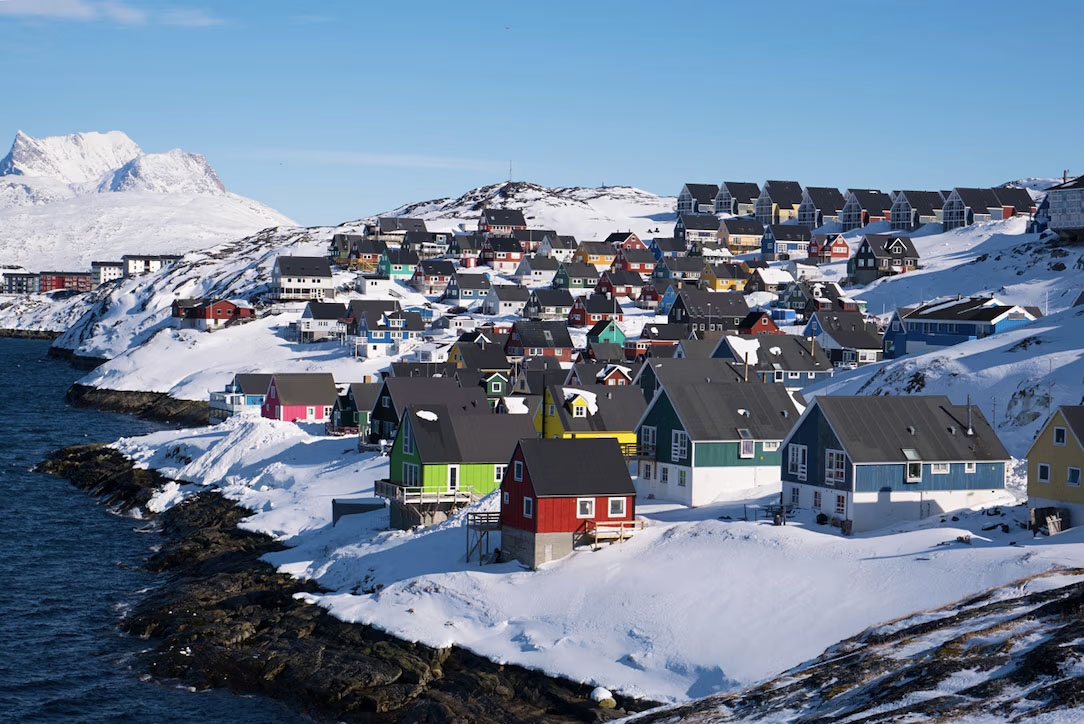
- Lessons from other Arctic nations, including Greenland’s dual fibre cables, hydroelectric expansion, and smart-infrastructure approach
- Why Canada needs redundancy, ownership diversity, and secure data routing across its Arctic networks
- How Arctic360’s Interactive Infrastructure Map will help governments, Investors, Indigenous partners, and industry model future energy, telecom, mining, and transportation scenarios to plan strategically — not project by project
Listen on your favourite app!




“All-domain awareness, knowing what’s happening from space to seabed, requires a lot of computing and processing and AI… every second matters.” – Madeleine Redfern
“It’s cheaper to move a gigabit of data than a gigawatt of energy… you definitely want to be processing that data primarily in the Arctic.” – Madeleine Redfern
“If we ourselves are waiting for telecom companies to bring infrastructure, we’re always on a dependency side… ownership of infrastructure should always be the goal of Indigenous communities.” – Lyle Fabien
“With the geopolitical impact we are seeing with different nations and instability… it almost feels like stability is a luxury at this present time.” – Satinder Singh
“If the proposed projects are going to contribute to Canada’s prosperity, defense, and national security… the infrastructure built must be equipped to meet the technological needs of today and be future-proof for tomorrow.”- Jessica Shadian
“Canada’s northern infrastructure is very fragile… highly vulnerable to outages.” – Lyle Fabien
Speaking of outages: “If you had to call the fire station because there was a fire… the only way to notify the fire department was to drive there.” – Madeleine Redfern
“We have an opportunity to build a smart Arctic in Canada. The only thing that is really hindering us is knowing how to do it, where to do it and how much it costs and who should effectively own that infrastructure.”
“We want to show everybody that the North is probably going to be the best place for data centre technology if you can bring both renewable energy solutions… and fibre.” – Lyle Fabien
“[Working] in the Canadian Forces we would utilize the information that was provided to us to support environmental monitoring as well to understand what was happening not just for the Canadian Forces platform, but also for environmental monitoring… that is a dual use in a commercial environment…also for the sovereignty…and…security of the data in the defense mechanism.” – Captain Singh
This episode highlights that building a smart, resilient Arctic is a social and economic imperative and central to Canada’s national security, sovereignty, and long-term competitiveness.
More Podcasts

Share This Post